
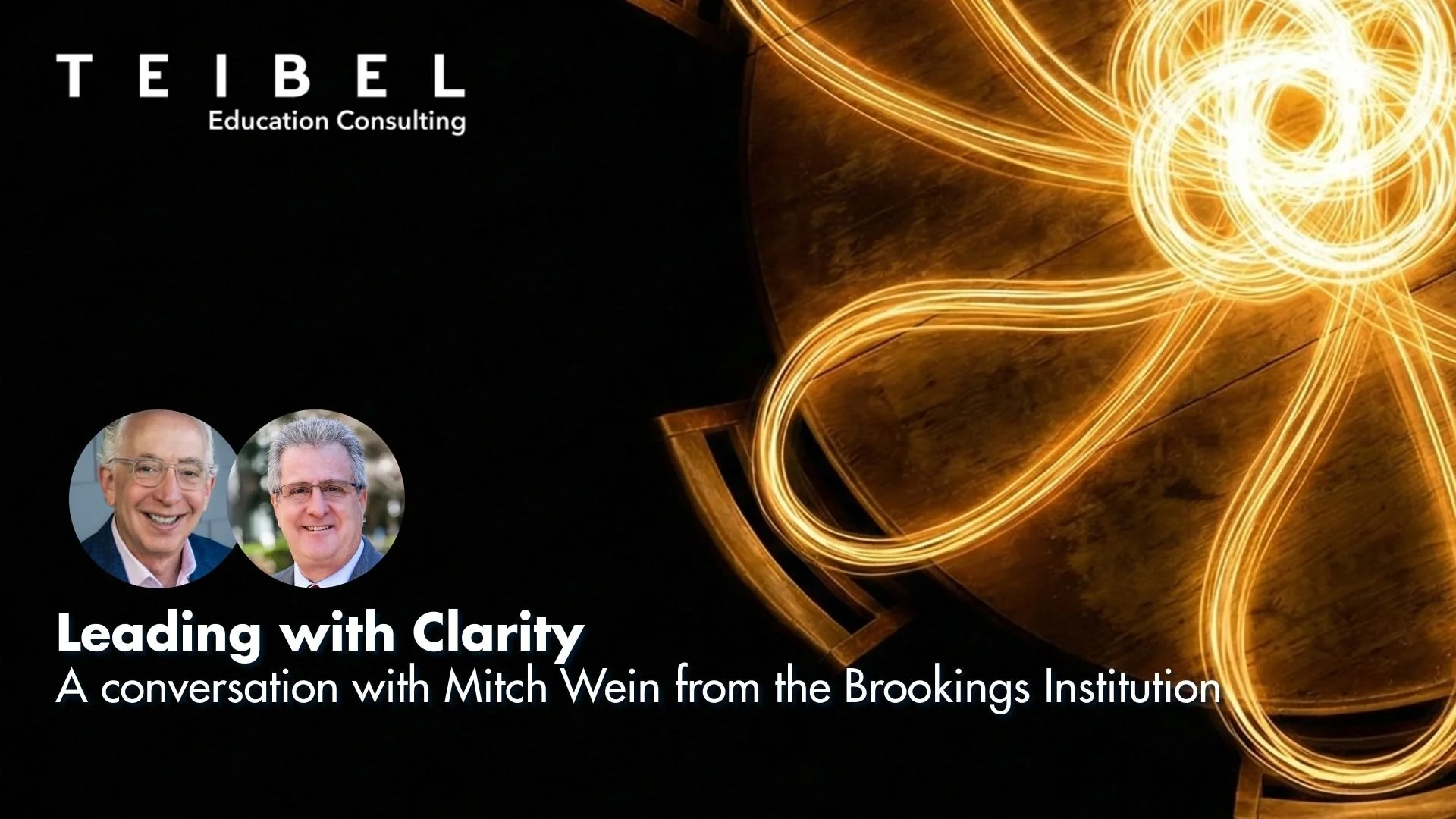
There are moments in a career when a small interaction—almost forgettable at the time—reshapes how a person thinks about leadership. For Mitch Wein, one of those key moments came during a meeting about selecting an architect, where a simple vote turned into a lesson about transparency and the value of explaining the reasoning behind our choices. That experience became the backbone of how he approaches strategy today, whether inside a college cabinet room or at the senior table of the Brookings Institution.
In this conversation with Howard Teibel recorded live at the EACUBO Annual Meeting, Mitch talks about his transition from higher education to his role as Senior Vice President for Finance and COO of a national think tank and how the two worlds mirror each other more than most people realize. Both require long-term thinking, both rely on evidence and principled debate, and both demand leaders who can see beyond the immediate decision to the ripple effects it creates. Mitch describes the way Brookings brings data and rigorous analysis to the public policy sphere to help people understand the trade-offs that sit beneath every major issue.
Howard and Mitch explore the pressures facing higher education—from public perception to financial resilience—and the importance of sharpening institutional focus rather than trying to be all things to all people. Through it all, Mitch returns to a theme that threads his entire career: leadership is less about asserting a direction and more about cultivating the conversations that help people understand why a direction makes sense. When leaders invite that kind of participation, decisions become clearer, strategy becomes more coherent, and the work feels connected to a larger purpose.
Leading with Clarity • A conversation with Mitch Wein from the Brookings Institution

Previous
Previous
Rethinking Non-Promotable Work • A Conversation with Laurie Weingart from Carnegie Mellon University
Next
Next